

Three Primitives
The pipeline is always:
What Decomposition Decides
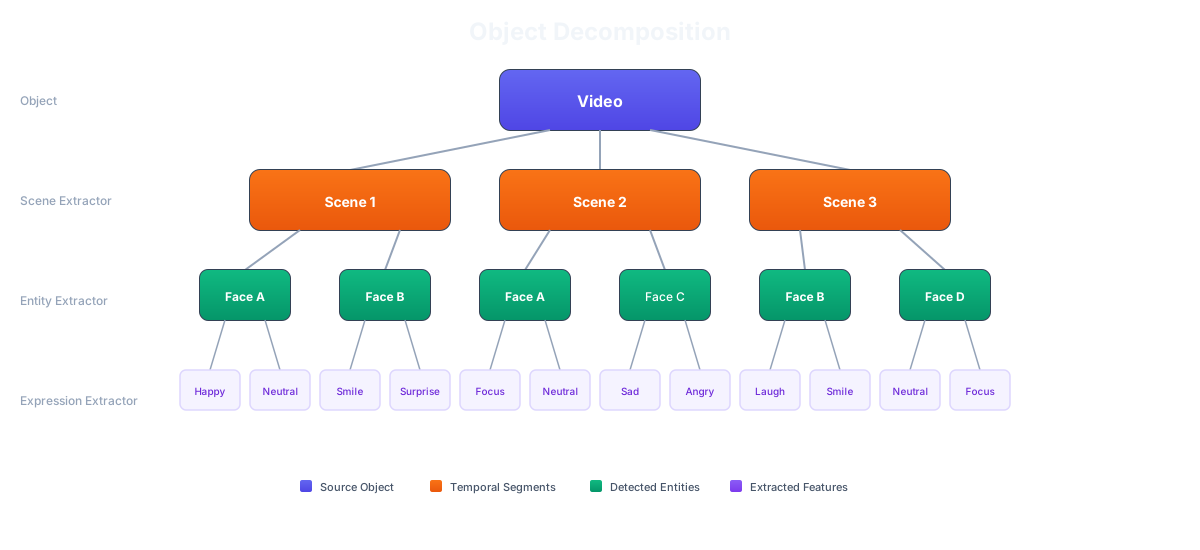
The feature extractor controls how an object is decomposed into documents. The strategy depends on the content type:Why It Matters
Without decomposition, a 30-minute video is one record. Searching for “the moment the CEO mentions revenue” means scanning the entire video. There’s no way to return a specific timestamp. With decomposition, that video becomes ~180 ten-second segments, each with its own transcript embedding, visual embedding, and scene description. A search returns the exact segment at 14:30 where the CEO says “revenue grew 22%.” The same applies to documents: a 200-page PDF becomes 200 searchable chunks instead of one monolithic record.Feature URIs
Every feature produced by decomposition gets a URI that uniquely identifies it:multimodal_embedding in one stage and face_embedding in another, even though they were produced by different extractors.
Configuring Decomposition
Decomposition is configured via thefeature_extractor field on a collection:
settings object controls the decomposition strategy. Each extractor has its own settings — see the extractor-specific pages for details:
From Video
Time, scene, and silence segmentation strategies
From Images
Visual embeddings, OCR, and structured extraction
From Audio
Silence-boundary segmentation and transcription
From Documents
Page, paragraph, and sentence chunking